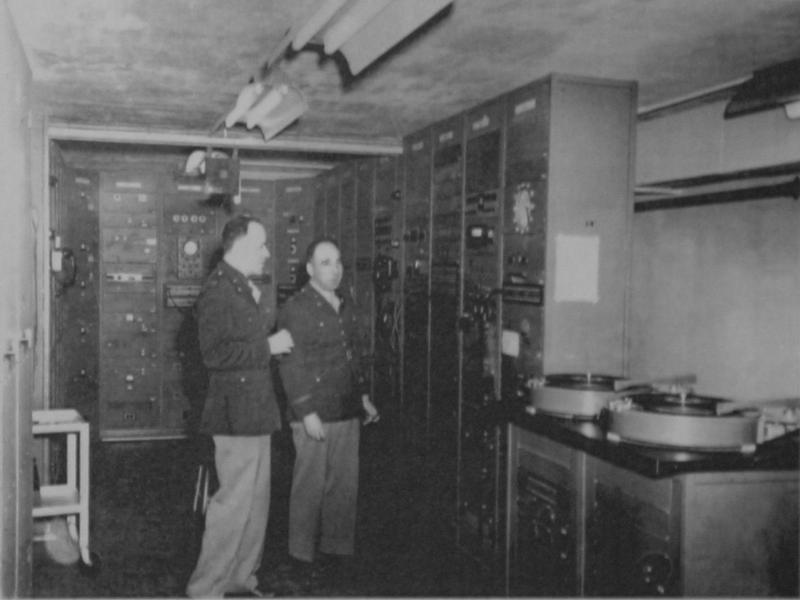
Development of SIGSALY Secure Voice System
United Kingdom
Technology
Telecommunications
4 min read
Updated By: History Editorial Network (HEN)
Published:
Updated:
The development of the SIGSALY secure voice system marked a pivotal advancement in secure communications during wartime. This initiative was influenced by the need for secure voice transmission to protect sensitive information from interception. Alan Turing, after his tenure at Bell Labs, contributed to this project while working for the Secret Service's Radio Security Service. His expertise in electronic enciphering played a crucial role in the design and implementation of SIGSALY, which utilized a combination of frequency modulation and digital encryption techniques to ensure the confidentiality of voice communications. The system was notable for its ability to provide secure conversations over standard telephone lines, a significant improvement over previous methods of communication that were vulnerable to eavesdropping.
The impact of SIGSALY was profound, as it enabled high-level military and government officials to communicate securely without the fear of interception by enemy forces. The system was operational during critical phases of the war, facilitating discussions that could influence military strategies and decisions. SIGSALY's design incorporated advanced technology for its time, including the use of vocoders to convert speech into a digital format, which was then encrypted. This innovation laid the groundwork for future developments in secure communication technologies. The success of SIGSALY demonstrated the importance of secure voice systems in military operations and influenced subsequent advancements in cryptography and telecommunications.
#mooflife
#MomentOfLife
#Sigsaly
#SecureVoiceSystem
#AlanTuring
#Cryptography
#MilitaryCommunications

Explore the Life Moments of
 AI Twin