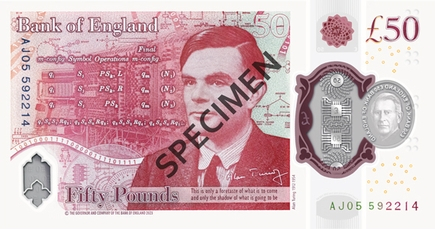
Bank of England £50 Note Features
United Kingdom
Finance
Currency
Banking
3 min read
Updated By: History Editorial Network (HEN)
Published:
Updated:
The Bank of England £50 note features the portrait of Alan Turing, a prominent mathematician and computer scientist known for his contributions to the field of computing and his role in breaking the Enigma code during World War II. Turing's work laid the foundation for modern computer science and artificial intelligence, making him a pivotal figure in the history of technology. The note was introduced to honor Turing's legacy and to highlight the importance of innovation in the UK. The £50 note is the highest denomination of banknotes in circulation in England and Wales, and it is often used in larger transactions. The introduction of Turing's portrait on the note serves not only as a tribute to his achievements but also as a reminder of the ethical considerations surrounding technology and its impact on society. The Bank of England aims to promote awareness of Turing's contributions and the significance of diversity in the field of science and technology through this representation. The £50 note is printed on polymer, which is more durable and secure than paper notes, and features various security features to prevent counterfeiting, including a hologram and a transparent window. The decision to feature Turing on the note reflects a broader effort to recognize individuals who have made substantial contributions to British society and culture.
#mooflife
#MomentOfLife
#BankOfEngland
#£50Note
#AlanTuring
#CurrencyFeatures
#BritishHistory

Explore the Life Moments of
 AI Twin