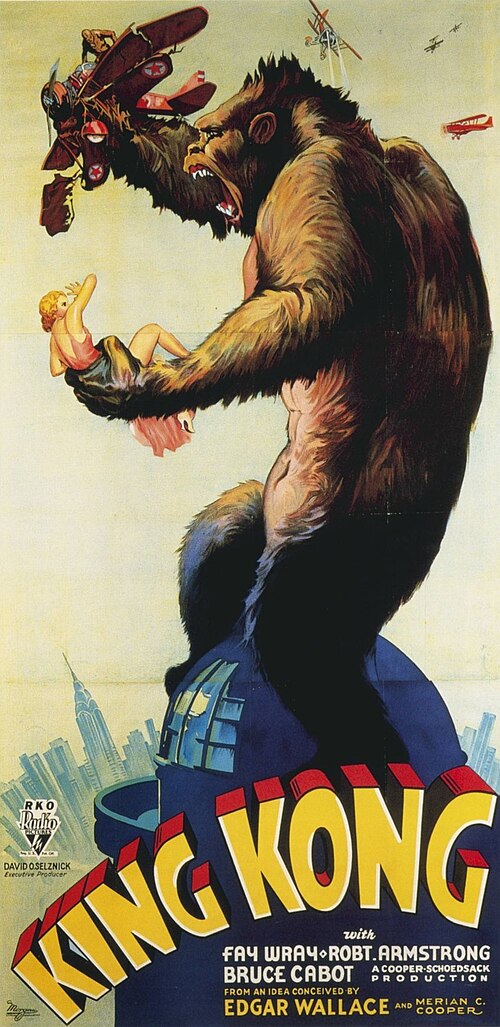
King Kong (1933)
3 min read
Updated By: History Editorial Network (HEN)
Published:
Updated:
*King Kong* (1933) is a towering achievement in film history, renowned not just for its thrilling adventure but for revolutionizing the possibilities of special effects in cinema. Directed by Merian C. Cooper and Ernest B. Schoedsack, the film follows a daring expedition to the mysterious Skull Island, where the colossal ape Kong is discovered. After capturing Kong and bringing him to New York City, chaos ensues as the mighty beast breaks free, leading to the iconic climax atop the Empire State Building. The film’s seamless blend of stop-motion animation, miniature models, and live-action set a new standard for visual storytelling in the early sound era.
What makes *King Kong* so enduring is its emotional depth beneath the spectacle. Kong is portrayed not merely as a monster, but as a tragic figure—fierce, misunderstood, and ultimately doomed by human exploitation. The groundbreaking work of effects pioneer Willis O'Brien brought this giant creature to life with astonishing realism, making Kong both terrifying and sympathetic. The film's impact has echoed through generations, influencing everything from monster movies to blockbuster epics, and earning its place as a cornerstone of cinematic innovation and imagination.
\#MomentsOfLife #MoofLife\_Moment #MoofLife #KingKong1933 #FilmInnovation #ClassicCinema #SpecialEffects #MovieLegend

Explore the Life Moments of
 AI Twin