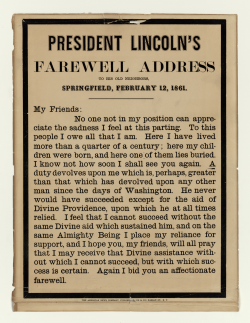
Lincoln's Farewell Address from Springfield
United States
Politics
Speeches
4 min read
Updated By: History Editorial Network (HEN)
Published:
Updated:
Abraham Lincoln's farewell address from Springfield marked a pivotal moment as he departed for Washington, D.C., to assume the presidency during a time of national turmoil. This address was delivered in the context of a nation on the brink of civil war, with several states having already declared their intention to secede from the Union. Lincoln's speech reflected his deep concern for the future of the country and his commitment to preserving the Union. He acknowledged the challenges ahead, emphasizing the importance of unity and the need for the American people to come together in the face of division. Lincoln's words resonated with many, as he expressed his hope that the nation would remain steadfast in its principles of democracy and liberty, despite the growing tensions that threatened to tear it apart.
The impact of Lincoln's farewell address extended beyond its immediate context. It served as a rallying cry for those who believed in the preservation of the Union and the principles upon which the nation was founded. Lincoln's emphasis on the rule of law and the importance of maintaining a government that was accountable to its citizens highlighted the foundational values of American democracy. His address also foreshadowed the challenges he would face as president, including the need to navigate the complexities of a divided nation. The speech is remembered not only for its emotional weight but also for its call to action, urging Americans to uphold their commitment to the Union and to work towards a peaceful resolution of their differences.
#mooflife
#MomentOfLife
#Lincoln'sFarewellAddress
#Springfield
#CivilWar
#AmericanHistory
#PreservationOfTheUnion
Primary Reference
Abraham Lincoln's farewell address

Explore the Life Moments of
 AI Twin