Homestead Act and Land Distribution Under Lincoln
United States
Legislation
Lincoln
4 min read
Updated By: History Editorial Network (HEN)
Published:
Updated:
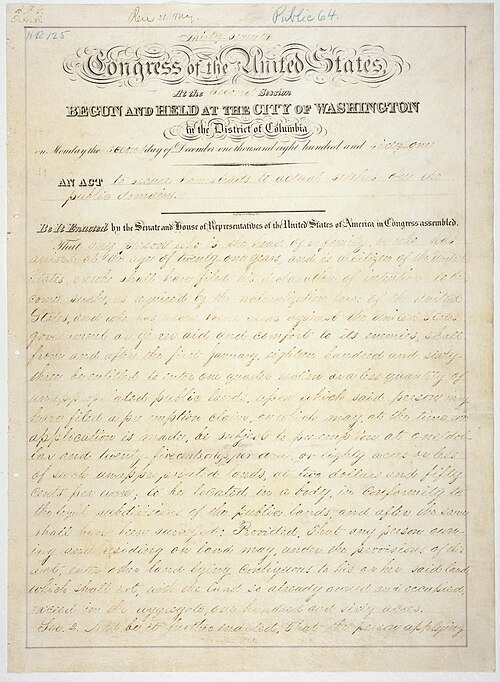
The Homestead Act was a pivotal piece of legislation that aimed to promote westward expansion in the United States by making land accessible to individuals at a low cost. Under this act, millions of acres of government-held land in the West were made available for purchase, allowing settlers to acquire up to 160 acres of land for a nominal fee, provided they met certain conditions. These conditions included living on the land for a specified period, cultivating crops, and building a dwelling. The act was part of a broader strategy to encourage settlement in the western territories, which were largely uninhabited and underutilized at the time. This initiative not only facilitated the growth of agriculture but also contributed to the establishment of communities and infrastructure in these regions.
The impact of the Homestead Act was profound, as it significantly altered the landscape of land ownership in the United States. By making land affordable and accessible, the act attracted a diverse group of settlers, including immigrants and those seeking new opportunities. It is estimated that by the end of the act's implementation, over 1.6 million homesteads had been granted, resulting in the distribution of approximately 80 million acres of land. This influx of settlers played a crucial role in the economic development of the West, leading to increased agricultural production and the establishment of new towns and cities. Additionally, the act laid the groundwork for future land policies and set a precedent for government involvement in land distribution, shaping the American landscape for generations to come.
#mooflife
#MomentOfLife
#HomesteadAct
#LandDistribution
#LincolnAdministration
#WestwardExpansion
#AgriculturalDevelopment
Primary Reference
Homestead Act (1862)

Explore the Life Moments of
 AI Twin