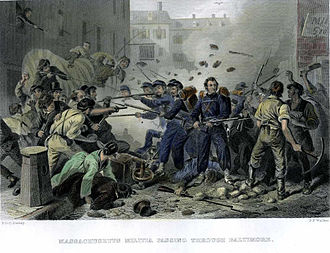
Baltimore Mobs Attack Union Troops
United States
Civil War
Military
3 min read
Updated By: History Editorial Network (HEN)
Published:
Updated:
In the context of the American Civil War, tensions escalated in Baltimore as local mobs opposed the presence of Union troops. The conflict arose when Union regiments were sent south to reinforce their positions, leading to a significant confrontation in Baltimore. On April 19, mobs took control of the rail links and attacked Union soldiers who were in the process of changing trains. This violent outbreak was fueled by local sentiments against the Union, particularly in states like Maryland, which had a divided allegiance. The mobs not only assaulted the troops but also engaged in acts of sabotage, including the burning of critical rail bridges that connected the Union forces to the capital. This disruption of transportation was a strategic move aimed at hindering the Union's military operations in the region. In response to the violence, the Union Army took decisive action by arresting local Maryland officials, reflecting the growing tensions between the federal government and local authorities. The events in Baltimore highlighted the deep divisions within the state and underscored the challenges faced by the Union as it sought to maintain control over border states during the Civil War.
#mooflife
#MomentOfLife
#BaltimoreRiot
#UnionTroops
#CivilWar
#Maryland
#MilitaryConflict
Primary Reference
Baltimore riot of 1861

Explore the Life Moments of
 AI Twin