Iran Places Revolutionary Guard Forces on High Alert
Iran
War
7 min read
Updated By: History Editorial Network (HEN)
Published:
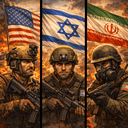
Islamic Revolutionary Guard Corps (IRGC) and other branches of Iran’s armed forces were operating under heightened military readiness as tensions with the United States intensified following the collapse of nuclear negotiations in Geneva, Switzerland one day earlier. The alert status came during a period of rapid escalation in diplomatic and military activity across the Middle East, just hours before a large-scale joint U.S.–Israeli military campaign against Iranian targets began on 28/02/2026.
The heightened alert followed the breakdown of indirect negotiations between the United States and Iran that concluded on 26/02/2026. During those talks, U.S. negotiators reportedly demanded the permanent dismantling of Iran’s nuclear enrichment capabilities, while Iranian officials insisted on maintaining enrichment for civilian purposes. The disagreement ended the Geneva discussions without a new agreement. On 27/02/2026, President Donald Trump reiterated that military action remained a possible option if Iran refused to accept a comprehensive ban on nuclear weapons development.
At the same time, the United States had already expanded its military presence in the region. Multiple naval and air assets were positioned across nearby waters, including the USS Abraham Lincoln (CVN-72) carrier strike group in the Arabian Sea and the USS Gerald R. Ford (CVN-78) carrier strike group moving through the Suez Canal toward the Red Sea. The buildup was intended to strengthen deterrence and provide operational readiness as diplomatic options narrowed.
Iranian authorities responded by increasing defensive preparations around key military and nuclear facilities. Inspectors from the International Atomic Energy Agency (IAEA) reported unusual vehicular activity around the Esfahan Nuclear Technology Center (ENTC) during this period. Satellite imagery and monitoring reports also indicated that Iran had taken steps to reinforce underground facilities. At locations such as the Natanz nuclear complex, soil and earthworks were reportedly used to cover tunnel entrances, a measure interpreted as an attempt to protect sensitive infrastructure from potential airstrikes.
In parallel with these defensive measures, the IRGC Ground Forces conducted military exercises across southern Iran during late February. The drills included the use of drones, missile systems, and special forces units, particularly near the Strait of Hormuz, a critical maritime route through which a significant portion of global oil shipments pass. These exercises formed part of broader preparations in case of regional conflict.
Iran’s security forces were also maintaining internal alert levels due to domestic unrest. Since late 2025, the country had experienced widespread anti government demonstrations across several cities. The IRGC and other security organizations remained deployed to monitor and suppress protest activity while simultaneously preparing for potential external military threats.
The high alert status on 27/02/2026 marked one of the final stages of military and political escalation before the joint United States–Israel strikes against Iranian nuclear and missile related facilities began the following day.
#IranMilitary
#IRGC
#USIranTensions
#MiddleEastSecurity
#StraitOfHormuz
Primary Reference
2026 Iran war
Explore the Life Moments of
 AI Twin