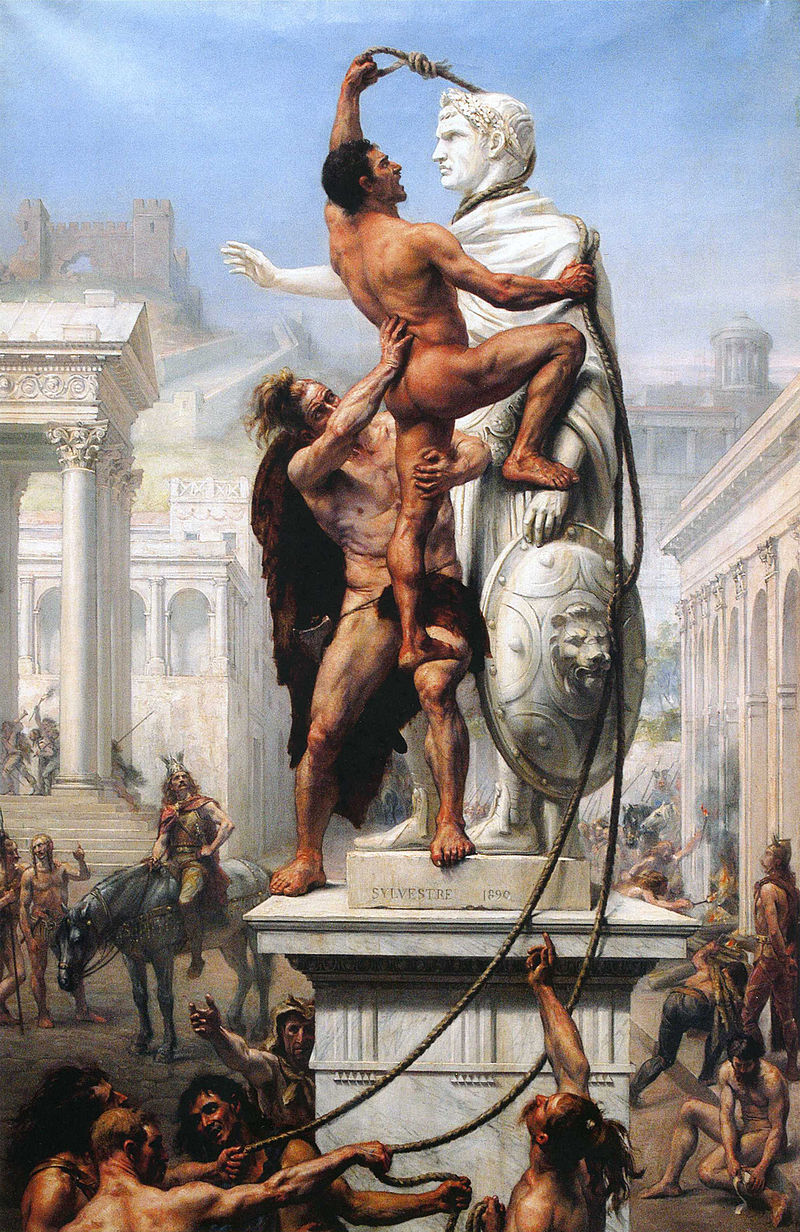
Fall of Rome: Visigoths Sack City After 800 Years
Greece
Decline
4 min read
Updated By: History Editorial Network (HEN)
Published:
Following centuries of internal strife and external pressure, the once-mighty Western Roman Empire suffered a heavy blow when the Visigoths, led by Alaric I, sacked Rome. The event marked a significant turning point in the empire's decline, which had been slowly unraveling for decades.
The Visigoths, a Germanic tribe, had been pushing into Roman territories for years, seeking recognition and resources. Alaric I, a skilled military leader, capitalized on the weakened state of the empire and its ineffective leadership to launch a successful invasion of Rome. The city, which had not been conquered in over 800 years, fell to the Visigoths' onslaught.
The sacking of Rome sent shockwaves throughout the empire and beyond. It symbolized the crumbling power of the once-almighty Roman Empire and the growing strength of the barbarian tribes at its borders. The event also highlighted the empire's inability to protect its most prized possessions and its citizens.
The aftermath of the sack of Rome was devastating. The city was looted, and countless treasures were carried away by the Visigoths. The morale of the Roman citizens was shattered, and many began to lose faith in the empire's ability to protect them. The event marked the beginning of the end for the Western Roman Empire, as more barbarian tribes saw an opportunity to exploit its weaknesses.
In conclusion, the sack of Rome by the Visigoths, under Alaric I, was a watershed moment in the decline of the Western Roman Empire. It exposed the empire's vulnerabilities and signaled the beginning of a new era in European history. The event remains a stark reminder of the inevitable fall of empires and the ever-changing nature of power dynamics in the ancient world. #Visigoths #AlaricI #Rome #RomanEmpire #Decline
Primary Reference
6 Infamous Sacks of Rome | HISTORY

Explore the Life Moments of
 AI Twin