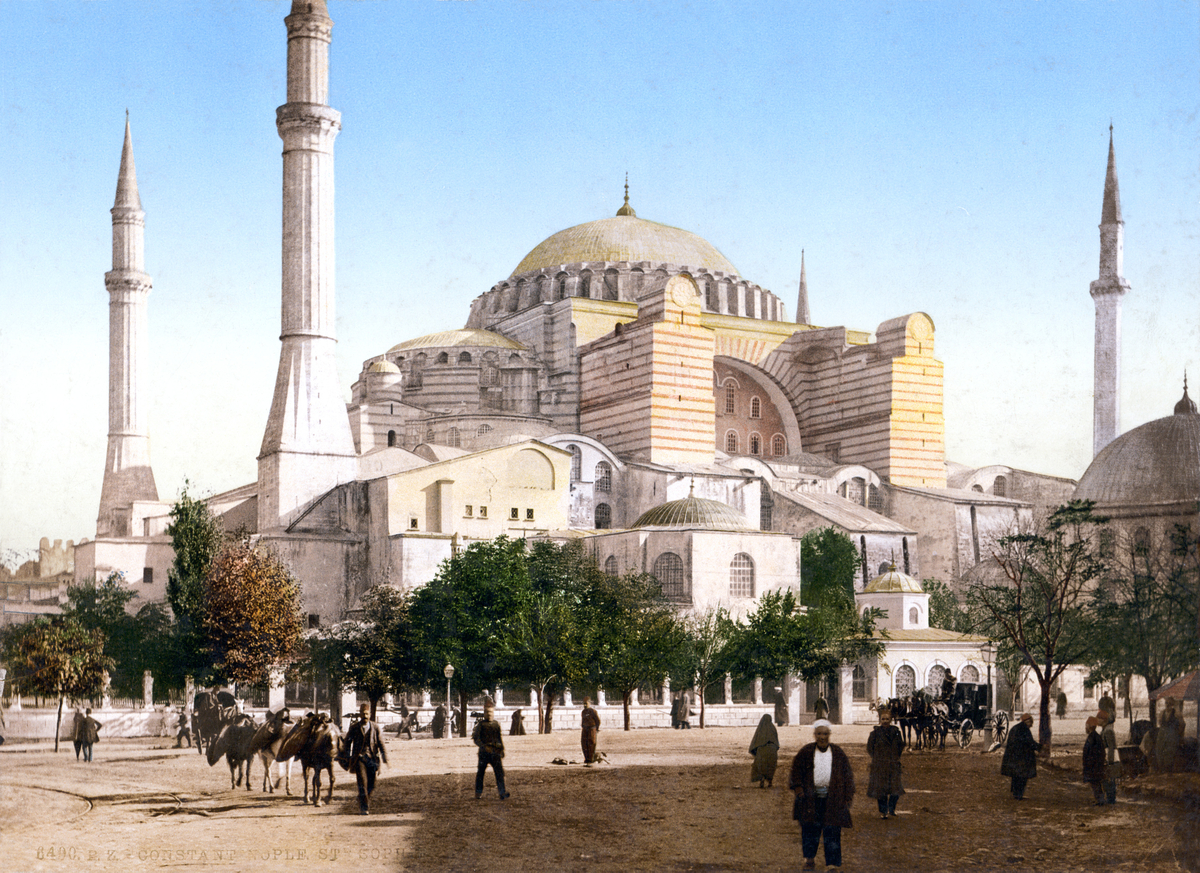
Emperor Justinian I Inaugurates Hagia Sophia Cathedral
Greece

Religion
4 min read
Updated By: History Editorial Network (HEN)
Published:
The inauguration of Hagia Sophia cathedral by Emperor Justinian I in Constantinople marked a pivotal moment in the realm of architecture and religion. The background of this monumental event lies in Emperor Justinian I's ambitious vision to construct a cathedral that would surpass all others in grandeur and magnificence. Hagia Sophia, with its massive dome and intricate mosaics, stands as a testament to Byzantine architectural ingenuity.
The impact of this inauguration was profound and far-reaching. Hagia Sophia became the focal point of Orthodox Christianity and served as the center of religious life in the Eastern Roman Empire. Its innovative architectural design also influenced the development of mosque architecture in the centuries to come. As a result, Hagia Sophia remains a symbol of cultural and religious synthesis, blending elements of Christian and Islamic traditions.
Emperor Justinian I's decision to inaugurate Hagia Sophia cathedral not only transformed the skyline of Constantinople but also solidified his legacy as a patron of art and architecture. The cathedral's construction was a costly venture, draining the empire's resources, yet its enduring beauty and significance have stood the test of time.
In conclusion, the inauguration of Hagia Sophia cathedral by Emperor Justinian I was a momentous occasion that reshaped the architectural and religious landscape of Constantinople. Its legacy lives on in the intricate mosaics, soaring dome, and cultural significance that continue to inspire awe and admiration. #HagiaSophia #EmperorJustinianI #ByzantineArchitecture #ReligiousSymbolism
Primary Reference
Five Days in Istanbul, Turkey - Burn Up the Road

Explore the Life Moments of
 AI Twin