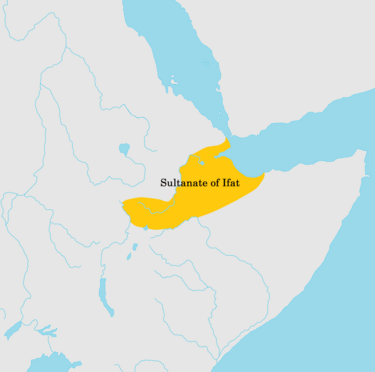
Ifat Sultanate, founded by the Walashma dynasty
Djibouti
4 min read
Updated By: History Editorial Network (HEN)
Published:
The Ifat Sultanate, founded by the Walashma dynasty, was a powerful medieval Muslim state in the Horn of Africa. Emerging in the late 13th century, it played a significant role in the region's political and economic landscape. The sultanate was known for its expansionist ambitions, extending its influence into present-day Djibouti and Somaliland. As a vital trade hub, Ifat controlled key routes connecting the interior of Africa to the Red Sea, facilitating commerce between Arab merchants and African traders. Its strategic position allowed it to flourish culturally and economically, shaping the historical trajectory of the Horn of Africa.
Throughout its history, the Ifat Sultanate frequently clashed with the Christian Kingdom of Abyssinia, engaging in a series of conflicts over territory and religious dominance. Despite facing external pressures, the sultanate remained resilient, contributing to the spread of Islam and fostering a rich legacy of architectural and scholarly achievements. The Walashma dynasty played a crucial role in governance, strengthening the Islamic identity of the region. Ifat’s influence eventually paved the way for the rise of the more powerful Adal Sultanate, which continued its legacy of resistance and expansion. Today, the history of Ifat remains an essential chapter in the story of East Africa’s medieval civilizations.
#IfatSultanate #HornOfAfrica #IslamicHistory #WalashmaDynasty #MedievalAfrica #AfricanHistory #Djibouti #Somaliland #MomentsOfLife #MoofLife_Moment #MoofLife

Explore the Life Moments of
 AI Twin