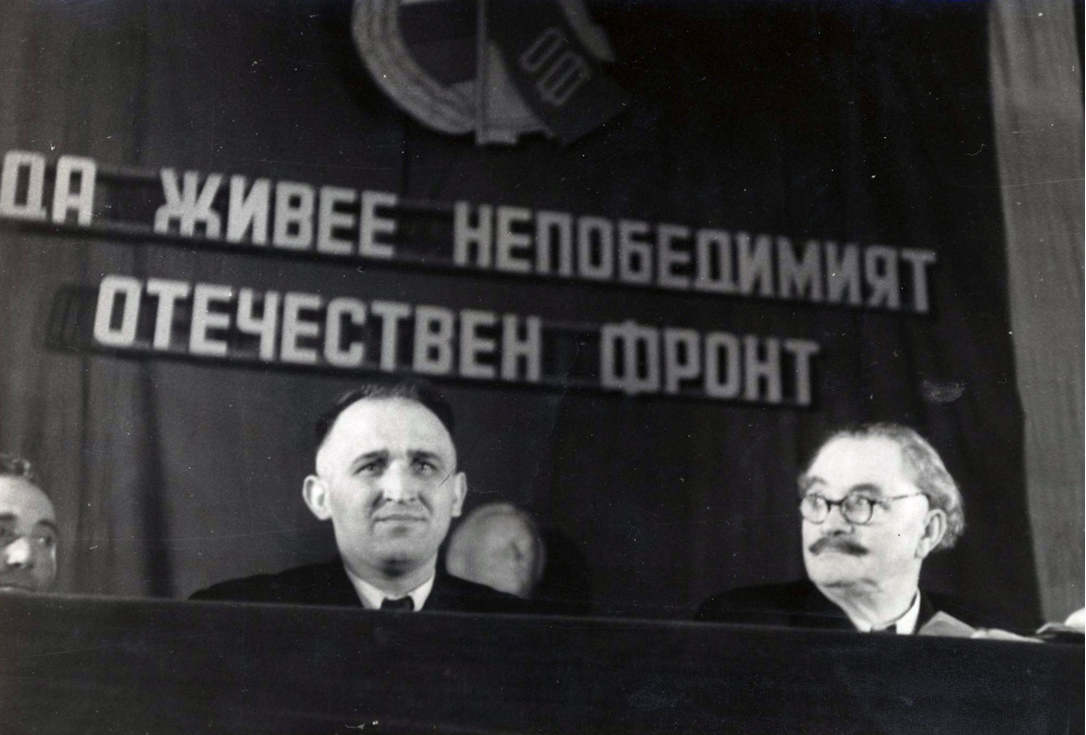
Todor Zhivkov assumed leadership of the Bulgarian Communist Party
Bulgaria
Political
Global Trade
3 min read
Updated By: History Editorial Network (HEN)
Published:
Updated:
Todor Zhivkov assumed leadership of the Bulgarian Communist Party, initiating a lengthy era of autocratic governance marked by strong bonds with the Soviet Union. Zhivkov's rise to power signified a shift towards centralized control and a commitment to Marxist-Leninist ideology within Bulgaria. His rule was characterized by suppression of dissent, state control of the economy, and a close alignment with Soviet policies. Zhivkov's tenure oversaw rapid industrialization, agricultural collectivization, and the enforcement of a one-party state.
Under Zhivkov's leadership, Bulgaria became intricately entwined with the Soviet Union, following its directives in foreign and domestic affairs. The country became a loyal ally, participating in the Warsaw Pact and adopting Soviet-style economic planning. Zhivkov's policies maintained stability in Bulgaria but also stifled political freedoms and economic innovation.
The period of authoritarian rule led by Zhivkov left a lasting impact on Bulgaria, shaping its political landscape and international relations for decades to come. The era was characterized by centralized power, ideological conformity, and dependence on the Soviet Union for political legitimacy and economic support.
#TodorZhivkov #BulgarianCommunistParty #AuthoritarianRule #SovietUnion #MarxistLeninistIdeology #OnePartyState
Primary Reference
Bulgaria Study_1

Explore the Life Moments of
 AI Twin